
But even if you should suffer for the sake of righteousness, you are blessed. And do not fear their intimidation, and do not be troubled, but sanctify Christ as Lord in your hearts, always being ready to make a defense to everyone who asks you to give an account for the hope that is in you yet with gentleness and reverence; and keep a good conscience so that in the thing in which you are slandered, those who revile your good behavior in Christ will be put to shame. 1 Peter 3: 14-16
Kline’s Abrahamic Covenant of Works 7: R. Scott Clark
Written by brandonadamsR. Scott Clark has recently stated that Kline held to a baptist understanding of the Abrahamic Covenant.
In short, Abraham was not Moses. The Abrahamic covenant is not the Mosaic. The Abrahamic was in no sense a covenant of works. It was a covenant of grace.1
1. Here we must not follow my beloved...
Read more
Muller on the Reformed History of Gal 3:17 (Translation Interpretation)
Written by brandonadamsAs explained in a previous post, I believe that Galatians 3:17 refers to the fact that the Abrahamic Covenant contained a promise that concernedor was in reference to Christ. The promise to Abraham that “in you all nations shall be blessed” was a promise concerning, about, in...
Read more
 When baptists talk about regenerate church membership, Presbyterians often mock the idea, noting that we must have “regeneration goggles” or we must know infallibly who the elect are. Part of this is a result of sometimes imprecise articulation of our position by baptists. For example,...
Read more
The New Geneva podcast recently had a two part series titled “A Case for Infant Baptism.” The podcast included 2 hosts and 2 guests, all of which are involved in Twitter discussions on the topic.
I am very thankful that they discussed the topic. I hope that they will consider the below...
Read more
Hodge on Owen’s Influence Over American Presbyterians
Written by brandonadamsWriting in 1863, Hodge notes
The Puritan or Independent theory of the Church, that it consists exclusively of those who are deemed regenerate, and their minor children, has unfortunately gained ascendency over many of our ministers and members. This is to be attributed partly to the general...
Read more
John Ball on Salvation Prior to Christ’s Death
Written by brandonadamsMy previous post was a response to an ongoing conversation with Michael Beck of the Two-Age Sojourner Podcast. He responded in the comments (give them a read). He was struggling to understand why I/we retain the language of “Covenant of Grace” if we mean something so different from...
Read more
Two Age Sojourner Podcast: Reformed Libertarianism (Substance/Administration)
Written by brandonadamsMichael Beck is a Reformed Baptist pastor in New Zealand. For some background, he has a great post on TGC called How (Not) to Plant a Church. Beck has a great podcast called Two-Age Sojourner. He is heavily influenced by Meredith Kline and that is reflected in the various episodes of the podcast...
Read more
Originally, the reformed argument for infant baptism was that the Old and the New Covenants are actually the same covenant. Calvin said “both covenants are truly one” (Institutes 2.10.2) and “As then the Law depended on that covenant which God made with his servant Abraham, it...
Read more
Hodge’s (Baptist) Understanding of the Visible/Invisible Church
Written by brandonadams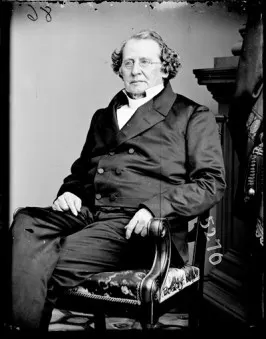 In a recent post I summarized Scottish Presbyterian James Currie’s criticism of Bannerman/Westminster’s understanding of the visible/invisible church distinction. He quoted extensively from a 17th century French reformed theologian Jean Claude who had a famous debate (1678) with French...
Read more
The French Reformed Understanding of the Visible/Invisible Church
Written by brandonadams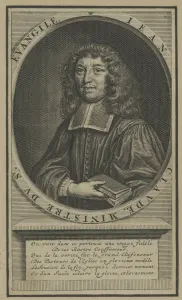 In a recent post I summarized Scottish Presbyterian James Currie’s criticism of Bannerman/Westminster’s understanding of the visible/invisible church distinction. He quoted extensively from a 17th century French reformed theologian Jean Claude who had a famous debate (1678) with French...
Read more
Witsius: Baptism Belongs Only to the Elect
Written by brandonadamsVI. In the meantime, let it be observed that if we take the strictest view of baptism, it is in its true nature and in the judgment of God suited only to the elect, because it is always agreeable to truth. For since baptism is a sign and seal of that covenant in which God has made over to his...
Read more
19th Century Scottish Presbyterian Criticism of Bannerman’s Visible/Invisible Church(es)
Written by brandonadamsWe have seen how 17th/18th century Dutch theologian à Brakel rejected Westminster’s distinction between the visible and invisible church as two distinct societies with two distinct memberships, in favor of seeing one church of Christ viewed infallibly by God or fallibly by man. We have...
Read more
Dr. Jekyll and Mr. Hodge on the Abrahamic Covenant(s)
Written by brandonadamsCharles Hodge is a great example of the double-mindedness of reformed paedobaptists who argue against a national church. When they argue against baptists, they insist that the Abrahamic Covenant is the Covenant of Grace. But when they argue against Romanists and others who insist on a national...
Read more
Was the Old Covenant an Administration of the Covenant of Grace?
Written by brandonadamsOne criticism of around the question of whether or not the Old Covenant was an administration of the Covenant of Grace. The issue, however, is very convoluted. What exactly is meant by the question?
Historically, going back to Bullinger and Calvin (2.10-11), the reformed...
Read more
A Necessary Consequence of Fesko’s Defense of Logic
Written by brandonadamsThe tide has been shifting in the modern reformed world. Debate over theology proper in reformed circles is finally reaching the question of epistemology. K. Scott Oliphint has argued that, in light of Van Til’s epistemology, “much of systematic theology that’s done, especially in...
Read more
T. David Gordon’s Dichotomous Abrahamic Covenant
Written by brandonadamsT. David Gordon notes that one Abrahamic promise (land and offspring) was fulfilled in the Old Covenant, while the other promise about one individual seed blessing all nations was fulfilled in the New Covenant.
Paul understood the covenant with Abraham to include essentially three promises: That God...
Read more
In Part 1 we saw how Murray pointed out the conditionality of the Abrahamic, Mosaic, and New covenants were all the same, and how Shepherd built upon that to make works instrumental in our justification. In Part 2 we saw how Kline responded to these claims by arguing that Abraham’s obedience...
Read more
Kline’s Abrahamic Covenant of Works 5: Glory Cloud Podcast
Written by brandonadamsI am very thankful for the Glory Cloud Podcast. It is dedicated to explaining the theology of Meredith Kline. The hosts (the first 60 or so episodes are co-hosted by Lee Irons and Chris Caughey and then Todd Bordow later replaced Lee Irons) have a strong grasp of the law/gospel distinction. It is...
Read more
Kline’s Abrahamic Covenant of Works 4: Contradiction
Written by brandonadamsAt this point, a tension arises in Kline’s formulation. He considers the Abrahamic Covenant a promise covenant that “connotes the principle of grace, the opposite of work,” wherein the “Inheritance of the promise was not through the works principle of the law (v.13), for...
Read more
Kline’s Abrahamic Covenant of Works 3: Royal Grant Proposal
Written by brandonadamsHow does Abraham’s typological merit relate to the Abrahamic Covenant? It is important to note that Kline did notdeny that the fulfillment of the Abrahamic promises (at the typological level) were conditioned upon Abraham’s obedience. He did not see Abraham’s typological merit as...
Read more
Kline’s Abrahamic Covenant of Works 2: Typological Merit
Written by brandonadamsIn Part 1 we saw how John Murray and Norman Shepherd interpreted the Abrahamic Covenant (like the Mosaic and New) as the Covenant of Grace requiring obedience in order for its promises to be fulfilled.
Old and New Covenants
How did Kline respond? First, he distinguished between the Old and New...
Read more
Kline’s Abrahamic Covenant of Works 1: Murray and Shepherd
Written by brandonadamsKline developed his covenant theology in interaction with and response to John Murray and Norman Shepherd (among others).
John Murray
In an effort to iron out inconsistencies in Westminster covenant theology, Murray rejected the Covenant of Works and interpreted Leviticus 18:5 as a condition of the...
Read more
H/T Nathan White.
There are clear passages indicating that ‘the forgiveness of sins’ is unique to the New Covenant (“remember their sins no more”; Jer 31:34). This is not because OT saints were under God’s wrath but because God overlooked their sins; he covered them...
Read more
Is John MacArthur Right About Revolution? – Reformed Libertarian
Written by brandonadams
John MacArthur . I greatly appreciated MacArthur’s focus on the gospel in the interview – specifically his willingness to personally direct it to Shapiro and call him to repentance. That is very rare in situations like this. It...
Read more
In previous posts (see here, here, here, and here) I have argued that in Galatians 3-4, Paul does not identify the Abrahamic Covenant with the New Covenant and then distinguish them both from the Mosaic Covenant. His argument is much more nuanced. In short, Paul distinguishes between two different...
Read more
All views presented are those of the respective author. Inclusion in the Apologetic Report should not be taken as an endorsement. However, we do review both authors and posts to make sure the views/opinions presented are edifying to believers, instructive to those being called, and most importantly, glorifying to God. Apologetic Report reserves the right to remove posts that do not, in our view, meet this criteria. All content used is in accordance with Section 107 of the Copyright Act.
May the information here, bless you in your sanctification and bring glory to God and Him alone.