
But even if you should suffer for the sake of righteousness, you are blessed. And do not fear their intimidation, and do not be troubled, but sanctify Christ as Lord in your hearts, always being ready to make a defense to everyone who asks you to give an account for the hope that is in you yet with gentleness and reverence; and keep a good conscience so that in the thing in which you are slandered, those who revile your good behavior in Christ will be put to shame. 1 Peter 3: 14-16
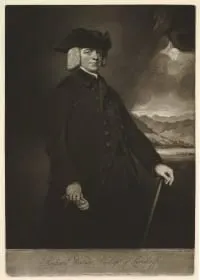 An Apology for the Bible is Bishop Watson’s answer to Thomas Paine’s book The Age of Reason, Part II, which is a sort of catalogue of standard gripes about both the Old and the New Testaments. The book is surprisingly timely, as many of these objections are still circulating today...
Read more
Hidden in Plain View now available on Kindle – On sale for limited time!
Written by Mia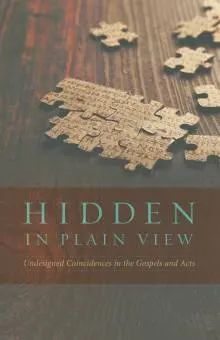 The Kindle edition of Hidden in Plain View: Undesigned Coincidences in the Gospels and Acts is available for pre-order on Amazon for only $4.99! This special price will continue until July 10, when the...
Read more
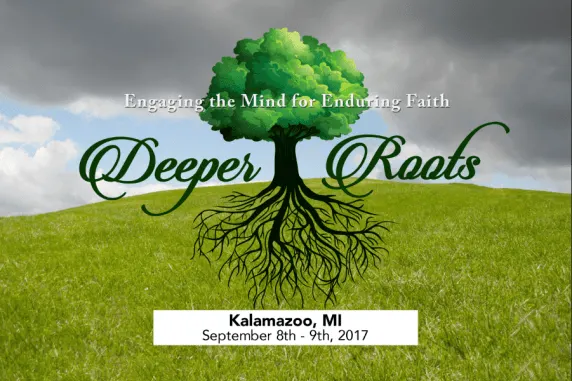 Looking for a way to:
- deepen your faith?
- strengthen your relationship with God?
- gain confidence in sharing your faith with others?
- pass on your faith to your children?
- meet others interested in these same things?
Join the Library of Historical Apologetics in parnertship with Defenders Media this fall at...
Read more
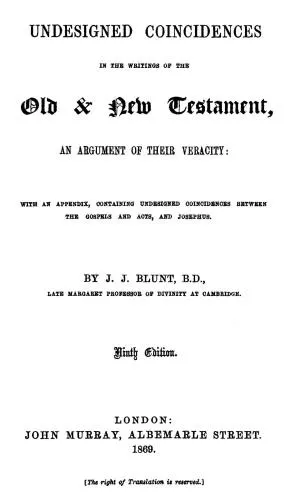 An undesigned coincidence occurs when one account of an event leaves out a bit of information that doesn’t affect the overall picture, but a different account indirectly supplies the missing detail, usually answering some natural question raised by the first. Forgers do not want to leave...
Read more
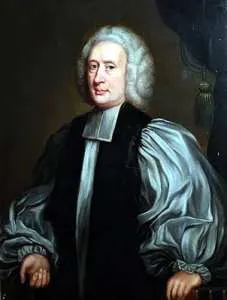 [T]he truth of our religion, like the truth of common matters, is to be judged of by all the evidence taken together. And unless the whole series of things which may be alleged in this argument, and every particular thing in it, can reasonably be supposed to have been by accident (for here the...
Read more
Somehow or other an extraordinary idea has arisen that the disbelievers in miracles consider them coldly and fairly, while believers in miracles accept them only in connection with some dogma. The fact is quite the other way. The believers in miracles accept them (rightly or wrongly) because they...
Read more
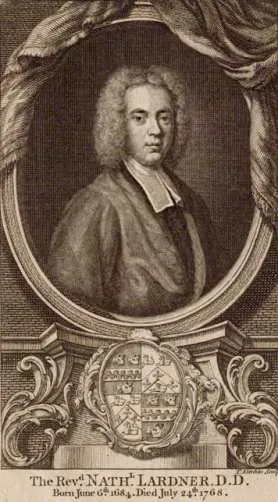 TWO OBJECTIONS TAKEN FROM THE SILENCE OF JOSEPHUS.
I. He has not mentioned the slaughter of the infants of Bethlehem:
II. Nor of the Galileans, whose blood Pilate had mingled with their sacrifices.
ST. MATTHEW says, chap. ii. 16, “Then Herod, when he saw that he was mocked of the wise men, was...
Read more
Jeremy Belknap: The nature of testimony and the rules of evidence universally acknowledged among mankind
Written by Mia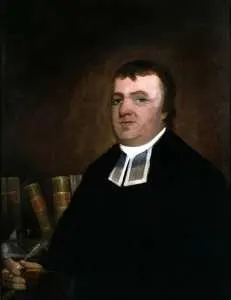 If it be allowed that there was such a person as Jesus Christ, that he was virtuous and amiable, that he preached the most excellent morality and practiced the virtues which he taught, from what source is the knowledge of this derived? How do we know that there was such a person, and that his...
Read more
Brooke Foss Westcott: To this point all former history converges
Written by Tim
Romanelli, Giovanni Francesco; St John and St Peter at the Empty Tomb of Christ; The Fitzwilliam Museum; http://www.artuk.org/artworks/st-john-and-st-peter-at-the-empty-tomb-of-christ-5556
If the fact of the Resurrection be in itself, as it confessedly is, absolutely unique in all human experience,...
Read more
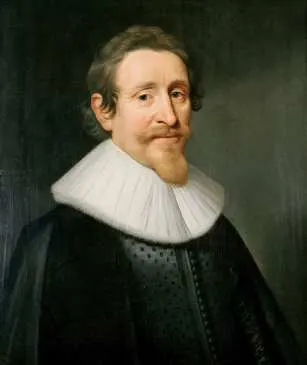 It is objected by some, that the sense of these books is sometimes very different: but whoever fairly examines this matter will find, that, on the contrary, this is an addition to the other arguments for the authority of these books; that in those places which contain any thing of moment, whether...
Read more
George Campbell: What is the criterion whereby we must judge, whether the laws of nature are transgressed?
Written by Mia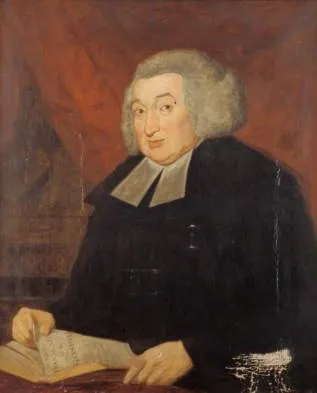
Reid, George; Principal George Campbell (1719-1796), DD; University of Aberdeen; http://www.artuk.org/artworks/principal-george-campbell-17191796-dd-105031
Now I insist, that as far as regards the author’s argument, a fact perfectly unusual, or not conformable to our experience, such a fact...
Read more
Thomas Chalmers: The exercise of reason in matters of theology
Written by Tim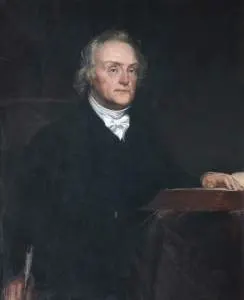
Sinclair, Louisa; Thomas Chalmers (1780-1847); University of Edinburgh; http://www.artuk.org/artworks/thomas-chalmers-17801847-94370
We do not condemn the exercise of reason in matters of theology. It is the part of reason to form its conclusions, when it has data and evidences before it. But it is...
Read more
 ‘Woman, why weepest thou? Whom seekest thou?’ The hope, that she might now learn what she sought, gave wings to her words–intensity and pathos. If the supposed gardener had borne to another place the Sacred Body, she would take It away, if only she knew where It was laid. This...
Read more
The new book Hidden in Plain View: Undesigned Coincidences in the Gospels and Acts by Dr. Lydia McGrew was released on March 1st!
Supported by careful research and accessibly written, Hidden in Plain View revives an argument pioneered by William Paley and developed by J.J. Blunt for the...
Read more
Do we meet him prepared as we should be for the battle?
Written by MiaIn a well-disciplined army, the officers are not only trained to handle arms and resist an attack from the enemy, but are instructed in the most efficient find successful modes of laying siege to fortresses, defending important stations, from assailants, and, in short, are prepared in every way to...
Read more
 “But I give no credit to miracles,” says a deist. This may be an act of reason, or it may not. God never requires us to believe without evidence: but where sufficient evidence is given, he is highly and justly displeased at men’s unbelief. Miracles are capable of proof, just as...
Read more
William Adams: For men to act without motives is unnatural
Written by Tim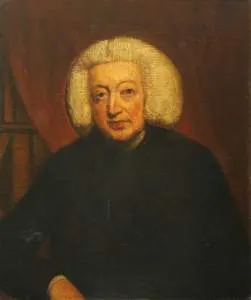
Rushton, Josiah; William Adams (1706-1789); Pembroke College, University of Oxford; http://www.artuk.org/artworks/william-adams-17061789-223053
It cannot be denied, that the Gospel is an adequate provision for the wants, a remedy for all the infirmities of mankind. There is nothing, that can be...
Read more
There is not, to my knowledge, in the whole range of literature an evasion like that in Hume’s Essay on Miracles. I can find no word, no figure of speech, no parallel case, by which adequately to represent its enormity. If we suppose a man of the highest character put on trial for his life,...
Read more
Richard Whately: Muddy water is apt to be supposed deeper than it is
Written by Tim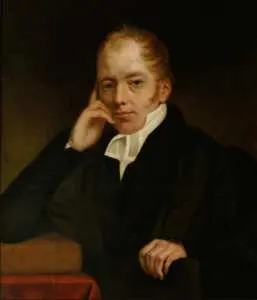 It is chiefly in such foggy forms that the metaphysics and theology of Germany, for instance, are exercising a greater influence every day on popular literature. It has been zealously instilled into the minds of many, that Germany has something far more profound to supply than anything hitherto...
Read more
 On the one hand, the idea that mankind is only a collection of genes which make up the DNA patterns has naturally led to the concept of remaking all of humanity with the use of genetic engineering. On the other hand, it has led to the crime and cruelty that now disturb the very people whose...
Read more
Olinthus Gregory: He will boast of this single objection
Written by Tim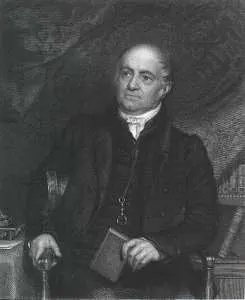 We do not deny that the scheme of revelation has its difficulties: for if the things of nature are often difficult to comprehend, it would be strange indeed if supernatural matters were so simple, and obvious, and suited to finite capacities, as never to startle or puzzle us at all. Origen...
Read more
Faber’s Four Rules for the Purpose of Ascertaining the Truth of Any Religion
Written by MiaWhen the degree of evidence, necessary to establish the truth of any matter of fact traditionally received, has once been laid down according to the principles of right reason; it does not appear that we are bound to admit any religion is true, unless its tokens of credibility correspond with such...
Read more
 We receive the books of the New Testament as the genuine works of Matthew, Mark, Luke, John, Paul, James, Peter, and Jude, for the same reason that we receive the writings of Xenophon, of Polybius, of Caesar, Tacitus, and Quintus Curtius; namely, because we have the uninterrupted testimony of ages...
Read more
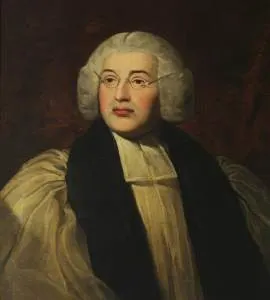
Olive, Thomas; Dr George Horne (1730-1792), President of Magdalen College (1768-1790), Bishop of Norwich (1790-1792); University College, University of Oxford; http://www.artuk.org/artworks/dr-george-horne-17301792-president-of-magdalen-college-17681790-bishop-of-norwich-17901792-223879
Let not the...
Read more
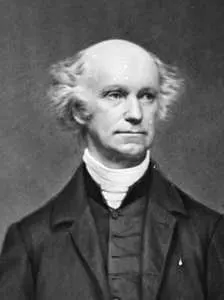 Charles Pettit McIlvaine (1799-1873), Episcopal Bishop of Ohio and president of Kenyon College, explains that he composed these lectures on the occasion of being invited to give lectures on apologetics in New York. Like Paley and Chalmers, McIlvaine openly acknowledges his debt to Lardner; the...
Read more
All views presented are those of the respective author. Inclusion in the Apologetic Report should not be taken as an endorsement. However, we do review both authors and posts to make sure the views/opinions presented are edifying to believers, instructive to those being called, and most importantly, glorifying to God. Apologetic Report reserves the right to remove posts that do not, in our view, meet this criteria. All content used is in accordance with Section 107 of the Copyright Act.
May the information here, bless you in your sanctification and bring glory to God and Him alone.