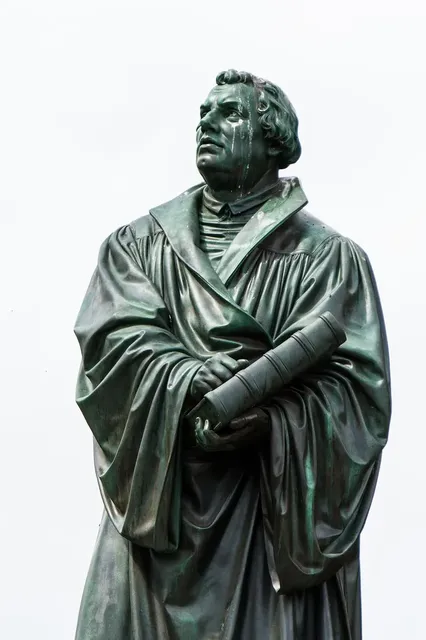
Almost five hundred years ago to the day, the life of the church was dramatically altered. On October 31, 1517, a Catholic monk and scholar named Martin Luther aired his grievances of the Roman Catholic Church’s practices by nailing The Ninety-Five Theses on the Power and Efficacy of Indulgences on the doors of a church in Wittenburg, Germany.
Originally posted for the purpose of discussion, Martin Luther disputed many practices of the Catholic Church, such as simony, nepotism, and especially indulgences. Of the 95 statements against the practices of the Catholic Church, almost half of them had to do with indulgences. Indulgences were—and in less practice still are—the pope’s granting of a lesser punishment that one must undergo for sins.
Though Martin Luther originally planned for his theses against the Catholic Church to be a matter of reform and discussion, a few zealous students translated it from the academic Latin to the common German, and with a little help of the printing press, spread his theses all across Germany. The rest—as they say—is history.
Of course, Luther was not the first to dare challenge the Papacy, but he was the loudest. Men like John Huss came before him, and he laid the groundwork for many others. We celebrate his work in reforming because of the vast influence he has had on Christianity for the last 500 years.
Reformation Day celebrates not just Martin Luther’s work for the Protestant Church, but all those to come after him in the name of reform. Most notably, the magisterial reformers like Ulrich Zwingli, John Calvin, John Knox, and some of the more orthodox radical reformers such as Balthasar Hubmaier, Felix Manz, and Conrad Grebel all helped bring the Christian Church back to New Testament orthodoxy.
Today, as Baptists, Presbyterians, Methodists, and the like, we celebrate because of the work of the reformers before us, but most importantly the God who brought the church back to His Word and to Himself. Semper Reformanda in love and truth!