
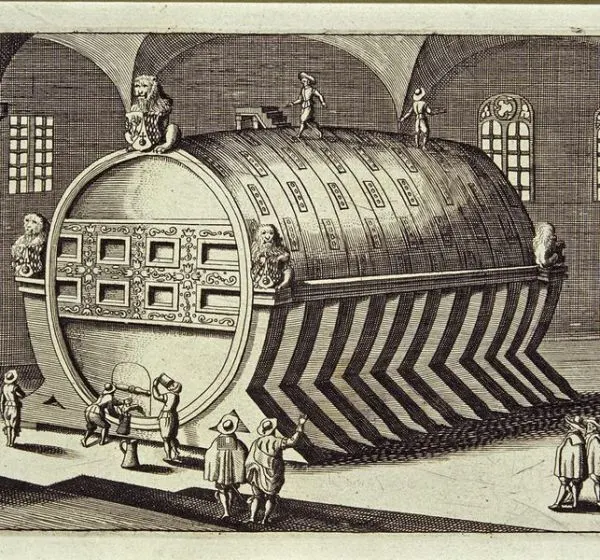
The Wine Barrel at Heidelberg Palace, built in 1591
There is a good reason why Jesus’ first miracle involved wine and a wedding. The King had arrived. The bridegroom had come to rescue his bride. It was not a time for mourning, for separation, but for union and celebration. The holy day (holiday) permits rest of both mind and body. Perhaps the wine was meant to give the bride a sense of her release. For the Roman philosopher Seneca, this is why Bacchus invented wine. He comments that the mind needs a time of rest so that it does not lose its vigor and become dull and languid. States should establish holidays so that the bond that work places on the mind may be slackened. For the sake of mental peace, Seneca explains, one should go for a walk outside or go for a brief journey, and when possible, have a drink of wine.
Sometimes [the mind] will get new vigour from … a change of place and festive company and generous drinking. At times we ought to reach the point even of intoxication, not drowning ourselves in drink, yet succumbing to it; for it washes away troubles, and stirs the mind from its very depths and heals its sorrow just as it does certain ills of the body; and the inventor of wine is not called the Releaser (Bacchus) on account of the license it gives to the tongue, but because it frees the mind from bondage to cares and emancipates it and gives it new life and makes it bolder in all that it attempts. But, as in freedom, so in wine there is a wholesome moderation […] Yet we ought not to do this often, for fear that the mind may contract an evil habit, nevertheless there are times when it must be drawn into rejoicing and freedom, and gloomy sobriety must be banished for a while. For whether we believe with the Greek poet that ‘sometimes it is a pleasure also to rave,’ or with Plato that ‘the sane mind knocks in vain at the door of poetry,’ or with Aristotle that ‘no great genius has ever exited without some touch of madness’ – be that as it may, the lofty utterance that rises above the attempts of others is impossible unless the mind is excited. When it has … soared far aloft fired by a sacred instinct, then alone it sings a song too lofty for mortal lips (On the Tranquility of Mind, XVII8-9).
Authors: Eric M. Parker
Read more https://epistole.wordpress.com/2015/12/15/what-hath-wine-to-do-with-theology/