

Check out these recent reviews and interviews of several popular B&H Academic titles and authors.
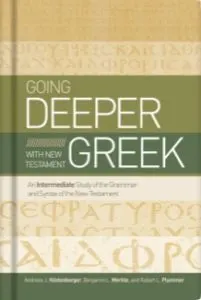
“Keeping current” is a must in New Testament Greek grammar. With a publication date of 2016, Going Deeper with New Testament Greek is sure to have the latest information on key grammatical and syntactical concepts. I am especially impressed with chapter 15 (Continuing with Greek) because it offers resources for students of the Greek NT. The writers of this Greek grammar strongly encourage their readers to invest time into recommended resources and tools such as websites (e.g., ntresources.com), exegetical commentaries (e.g., EGGNT series, Handbook on the Greek Text series, etc.), lexicons (e.g., BDAG), and grammars.
This is an all-in-one grammar that will be a great help to the student or pastor who desires to advance his understanding of the Greek New Testament. If you plan to learn or continue to learn Greek, you will want this text on your shelf.
— Wayne Slusser
Southern Seminary: Should we teach Greek in our churches?
Robert Plummer: I think that would probably depend on the context. Clearly one does not need to know Greek to understand the Scriptures and to be saved or to grow as a Christian, but it is striking how many non-ministerial people in ordinary walks of life have a desire to learn Greek and Hebrew because they want to be as close as possible to the Word of God. I hear stories from former students and other people who tell me, “I’m teaching a little class of Greek to people in my church and they’re loving it.” If you have people who want to do that in your context, I think that’s great. I think there are other ministry contexts where it just would not further the advance of the gospel. Maybe it would seem that you’re creating a gnostic sect of more educated people. But as long as it’s just seen as optional, and if there are people interested, there’s nothing like teaching Greek to really learn it.
— ‘Sacred mission’: Plummer on his love for Greek and new intermediate grammar — Towers Interview
Going Deeper is easy to read, and not only works as a reference grammar but can enjoyably be read cover-to-cover, with the chapters arranged in sequential order matching a professor’s lecture schedule. It gives students of various levels of learning — from someone fresh out of baby Greek to the doctoral candidate — a chance to strengthen their Greek from the ground up, offering encouragement along the way.
— Towers
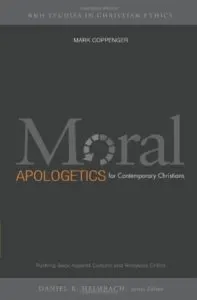
Fred Zaspel: Let’s begin with basics: What is apologetics? And then what is moral apologetics? What is your book all about?
Coppenger: Well, first, apologetics is defense of the faith. I do think it comes down to, and this sounds like kind of a bad word, but I think it’s sort of like public relations. It’s PR. It’s presenting the faith to the world at large in defending against the critics. The expression moral apologetics comes from the Broadman and Holman folks. It’s fine, but we have a course here that I think says it a little bit better – apologetical ethics. It’s working with ethics and then showing the splendor of the Christian ethic.
I would say the moral splendor of the Christian ethicists, the people who do ethics, and then the splendor of the fruit. When Christianity moves in it has a leavening effect, it raises all boats, it changes people and changes societies. So it’s a matter of looking at our ethic from a lot of different angles and presenting that as a witness to the reality and the greatness of God.
The part that fits best is the fourth part in the book where I talk about doing apologetics in a moral or winsome way. You can do it in a shabby way and take cheap shots and so forth and so on, but truly moral apologetics are admirable apologetics. You use admirable techniques and so forth. But the bulk of the book is I would say probably better expressed as apologetical ethics. It’s showing how the Christian ethic is the testimony or witness to the greatness of God.
— Books at a Glance Interview
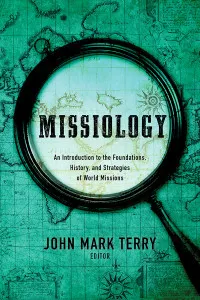
Even with the few chapters that contained less information or with the few authors I disagreed with, on the whole, this was a valuable resource in providing me with a deeper understanding and appreciation for Christian missions and how to reach unreached people groups with the Gospel. It is a resource every seminary student taking a course on missions should read as a primary textbook, even though it is in depth overall and will require discipline to complete it in a semester setting. Even though I will be majoring in another field besides missions upon the completion of my MDiv, reading the resource gave me a greater understanding of how I can function in the field of my major (theology) with those who are involved in Christian missions, as well as how churches can more effectively reach unreached people groups with the Gospel and do everything in the power of the Holy Spirit and the glory of God to do its part in fulfilling the Great Commission. It was an edifying and informative resource that I would highly recommend to anyone wishing to go deeper in the study of Christian missions.
— Still Truth
The post Around the Web (June 2016) appeared first on B&H Academic.
Read more http://www.bhacademicblog.com/around-web-june-2016/